Last Updated on November 14, 2026 by adminahb
By: William E. Simpson II
The historical record of livestock grazing on the American public domain contains repeated episodes of lethal conflict, large-scale destruction of competing herds, and measurable degradation of rangelands. These outcomes occurred primarily under conditions of weak or absent regulation. The Federal Land Policy and Management Act of 1976 (FLPMA) later imposed a multiple-use and sustained-yield framework intended to constrain the prioritization of any single commercial use.
Recent Department of the Interior actions, including Secretarial Order 3454 and a November 2026 proposed rule revising BLM planning regulations, reduce the procedural and analytical requirements that have limited such prioritization.
𝗟𝗲𝘁𝗵𝗮𝗹 𝗖𝗼𝗻𝗳𝗹𝗶𝗰𝘁𝘀 𝗮𝗻𝗱 𝗛𝗲𝗿𝗱 𝗗𝗲𝘀𝘁𝗿𝘂𝗰𝘁𝗶𝗼𝗻 u𝗻𝗱𝗲𝗿 𝗢𝗽𝗲𝗻-𝗥𝗮𝗻𝗴𝗲 𝗖𝗼𝗻𝗱𝗶𝘁𝗶𝗼𝗻𝘀
Between the 1870s and the early 1920s, ranchers and their associations engaged in a series of conflicts with sheep operations across eight Western states and territories.
Standard historical compilations record approximately 120 engagements. At least 54 men were killed, predominantly sheepherders. Between 50,000 and more than 100,000 sheep were slaughtered by clubbing, shooting, poisoning, or driving over cliffs.
Documented incidents include the 1896 drive of roughly 12,000 sheep over a cliff near North Rock Springs, Wyoming; the Oregon Sheepshooters’ War (1895–1906), in which at least 25,000 sheep were killed; and multiple Wyoming and Montana raids that destroyed thousands of animals in single nights. Prosecutions were rare.
The Johnson County War in Wyoming (1889–1893) involved large ranchers organized as the Wyoming Stock Growers Association hiring gunmen to confront alleged rustlers and smaller ranchers. Published estimates place total deaths at 20–40, including roughly 10 homesteaders or small ranchers. Invaders carried a target list of approximately 70 names that included local officials. Nate Champion and Nick Ray were killed at the KC Ranch in April 1892. Federal troops ended the principal siege; few convictions followed.
The Pleasant Valley War in Arizona (approximately 1882–1892) began with cattle-sheep competition and expanded into multi-sided ambushes. Death estimates range from the mid-20s to 35–50. Early violence included the killing of a Basque sheepherder; later killings were largely retaliatory among the factions. Nearly all adult males of the principal families were killed or driven out.
These episodes occurred on unregulated public-domain lands.
Contemporary range examiners also documented the loss of native perennial grasses, increased bare ground, and accelerated erosion on heavily stocked tracts. The absence of enforceable allocation mechanisms allowed ranchers who arrived first or organized most effectively to exclude competitors by force and to stock beyond sustained capacity during favorable years.
𝗘𝗰𝗼𝗹𝗼𝗴𝗶𝗰𝗮𝗹 𝗜𝗺𝗽𝗮𝗰𝘁𝘀 𝗼𝗳 𝗡𝗼𝗻-𝗡𝗮𝘁𝗶𝘃𝗲 𝗥𝘂𝗺𝗶𝗻𝗮𝗻𝘁 𝗚𝗿𝗮𝘇𝗶𝗻𝗴 𝗶𝗻 𝗙𝗼𝗿𝗲𝘀𝘁𝘀 𝗮𝗻𝗱 𝗥𝗮𝗻𝗴𝗲𝗹𝗮𝗻𝗱𝘀
Domestic cattle and sheep are non-native to North America; they descend from Eurasian stock introduced by European settlers.
The USDA defines an invasive species as one that is non-native to the ecosystem under consideration and whose introduction causes or is likely to cause economic, environmental, or human-health harm (https://www.usda.gov/farming-and-ranching/plants-and-crops/pest-and-weed-management/invasive-species). When managed on private agricultural lands, they can be productive; when placed on public forests and rangelands without adequate controls, they produce documented adverse effects.
Heavy grazing by cattle and sheep reduces native perennial cover, depletes the soil seed bank of desirable plants, and creates bare ground that favors invasive annuals such as cheatgrass. Compaction and trampling lower water infiltration, increase runoff, and accelerate sheet and gully erosion. In riparian zones—disproportionately preferred by livestock—bank trampling, loss of woody vegetation, elevated water temperatures, and elevated bacterial loads are repeatedly recorded. These changes reduce habitat quality for native fish, amphibians, birds, and mammals and simplify plant communities, lowering ecological diversity.
In forest understories, selective removal of fine fuels and grasses can allow denser tree regeneration and alter historical fire regimes. While targeted grazing is sometimes used to reduce fine fuels, the same animals disperse invasive seeds on their hooves and on hides, and overgrazing can leave stands more vulnerable to high-severity fire once invasive annuals dominate.
The 2021 Bootleg Fire in southern Oregon burned across large areas of national-forest grazing allotments; post-fire assessments documented both livestock losses and multi-year restrictions on re-entry while vegetation recovered. Broader literature links livestock disturbance to the spread of fire-prone invasives and to reduced resilience in many Western forest and rangeland systems.
Cattle have 4 times the grazing overlap with native ungulates such as deer compared to native wild horses, which further concentrates pressure on regenerating collapsed western cervid populations. Cattle grazing adversely impacts native vegetation and riparian corridors. The cumulative result in poorly managed allotments is simplified, erosion-prone landscapes with reduced biodiversity and altered fire behavior—precisely the conditions that multiple-use statutes were written to avoid.
𝗥𝗲𝗴𝘂𝗹𝗮𝘁𝗼𝗿𝘆 𝗥𝗲𝘀𝗽𝗼𝗻𝘀𝗲𝘀 𝗮𝗻𝗱 𝗧𝗵𝗲𝗶𝗿 𝗟𝗶𝗺𝗶𝘁𝘀
The Taylor Grazing Act of 1934 ended the open range by creating grazing districts and a permit system. Local advisory boards composed largely of existing ranchers exercised substantial influence. The statute reduced the most chaotic overstocking but also formalized preferential access for established ranchers and maintained federal fees well below private-land rates.
The 1946 merger of the General Land Office and the Grazing Service created the Bureau of Land Management and embedded a large livestock-permit program inside the new agency.
FLPMA (1976) directed the BLM to manage for multiple use and sustained yield, explicitly including wildlife, watershed, recreation, and other values alongside range. It required land-use plans developed through public participation and environmental analysis. Subsequent statutes and regulations added further procedural requirements. In practice, the permit structure and historical allocations kept livestock as a dominant consumptive use on many millions of acres.
Litigation under NEPA, the Endangered Species Act, and FLPMA has forced reductions or additional stipulations on some allotments; other allotments have continued to show utilization or ecological indicators that agency standards classify as not meeting objectives. Riparian damage, competition with wild horses and other wildlife, and localized overgrazing remain documented in specific districts.
𝗖𝘂𝗿𝗿𝗲𝗻𝘁 𝗣𝗿𝗼𝗰𝗲𝗱𝘂𝗿𝗮𝗹 𝗖𝗵𝗮𝗻𝗴𝗲𝘀
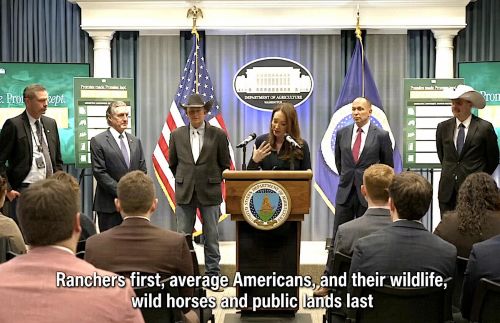
Secretarial Order 3454 directs bureaus to expand grazing opportunities, expedite full-term permit renewals, reinstate suspended Animal Unit Months where possible, and accelerate reductions of wild horses and burros to the maximum extent practicable.
On November 10, 2026, the BLM published a proposed rule (RIN 1004-AF53) revising 43 CFR Part 1600. The proposal eliminates mandatory Federal Register notice at the initiation of planning, replaces the longstanding 90-day comment period on draft plans supported by environmental impact statements with a default minimum of 30 days, removes the regulatory requirement for an environmental impact statement on every plan development or revision, shortens consistency-review windows, and creates a new Subpart 1611 under which a presidentially appointed official may authorize reduced or waived public participation, coordination, and consistency requirements in “emergency circumstances.” Areas of Critical Environmental Concern face stricter designation criteria and clearer authority for modification or removal.
These changes reduce the procedural tools that FLPMA and implementing regulations have used to require trade-off analysis between livestock forage and other multiple-use values. They supply a faster pathway for implementing directives that expand livestock allocations and reduce wild-horse numbers. Whether the resulting decisions improve or further degrade long-term range condition, riparian function, or wildlife habitat is an empirical question that depends on site-specific monitoring.
The historical record shows that periods of weaker procedural and ecological constraints on livestock use produced lethal exclusion of competitors, large-scale destruction of sheep, and documented vegetation loss.
The 2026 proposed rule and concurrent grazing directives reopen those trade-offs by design.
References:
- Sheep Wars overview and casualty estimates: https://en.wikipedia.org/wiki/Sheep_wars
- Johnson County War casualty estimates: https://en.wikipedia.org/wiki/Johnson_County_War
- Pleasant Valley War estimates: https://en.wikipedia.org/wiki/Pleasant_Valley_War
- USDA invasive species definition: https://www.usda.gov/farming-and-ranching/plants-and-crops/pest-and-weed-management/invasive-species
- Livestock grazing and riparian/stream impacts (Belsky et al. review summary): cited in multiple Western Watersheds and peer-reviewed summaries of 20th-century range science
- Cheatgrass, grazing disturbance, and fire (Western Watersheds Project literature review of >500 studies): https://www.westernwatersheds.org/livestock-grazing-is-fueling-wildfires/
- Bootleg Fire allotment impacts and recovery reporting: Capital Press and USFS regional summaries (2021–2023)
- Forest understory and fire-regime effects of livestock (Belsky & Blumenthal 1997 and related exclosure studies): available via USDA ARS and peer-reviewed forest ecology literature
These sources document both the historical human and animal casualties and the ecological mechanisms by which non-native ruminant grazing alters soils, vegetation, riparian function, and fire behavior on public lands.
Visit www.wildhorsefirebrigade.org for more information.